
The Science of
Osteogenic Bone Growth Stimulator (BGS)
Explore the science behind BGS and the research that informs its use.
The Science Behind Bone Growth Stimulation
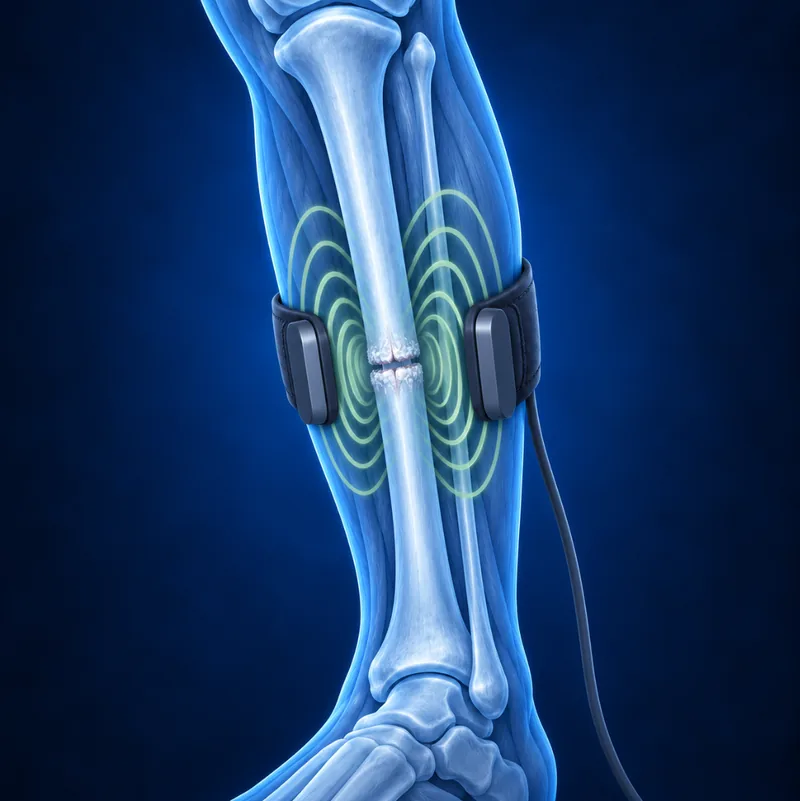
Osteogenic bone growth stimulators deliver targeted signals to a fracture or spinal fusion site to support the body’s natural bone-healing process. Noninvasive electrical systems use technologies such as pulsed electromagnetic fields (PEMF) or capacitive coupling to deliver stimulation from outside the body.
Bone responds to electrical, chemical, and mechanical signals. Laboratory research suggests stimulation can influence calcium-related pathways and osteoblasts, the cells that build bone. Researchers have also observed changes in proteins and growth factors involved in forming the structural framework of new bone. These findings help explain the biological basis for treatment.
The primary goals are fracture union and successful spinal fusion. Depending on the device’s approved labeling, use may include established traumatic fracture nonunion, support following lumbar fusion, cervical fusion in patients at high risk of non-fusion, or a previously failed fusion. Treatment complements stabilization, follow-up imaging, and the physician’s care plan. Indications are device-specific, so fracture-healing and spinal fusion devices are not interchangeable.
Research by area of Interest
A clearer understanding. A more informed approach to recovery.
Recover. Relief. Restore.