
The Science of
Pulsed Galvanic Stimulation (Direct Current)
Explore the science behind Galvanic Stimulation and the research that informs its use.
The Science Behind Galvanic Stimulation
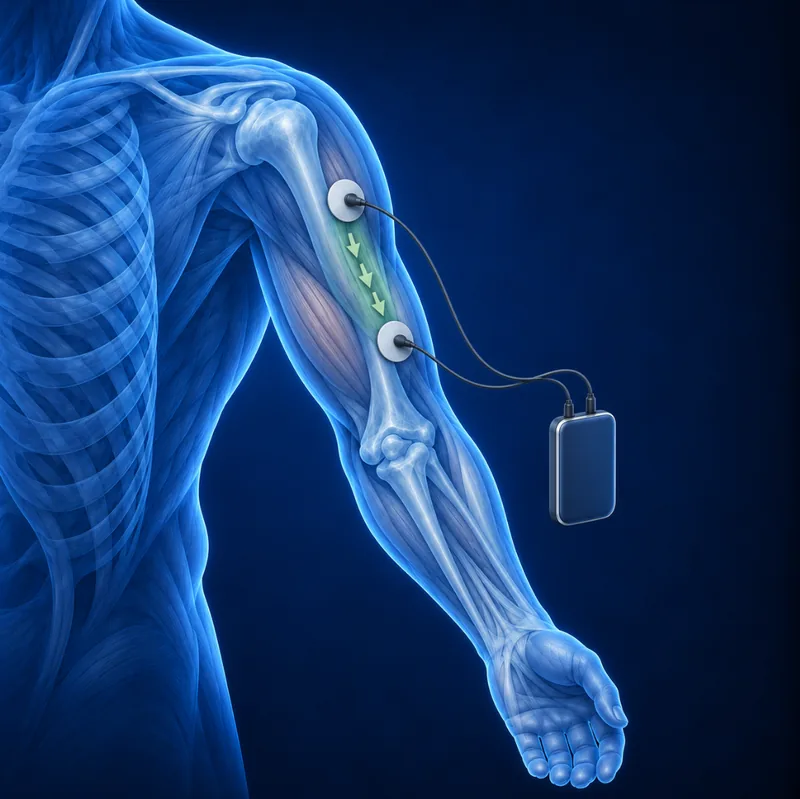
Pulsed galvanic stimulation delivers electrical pulses through skin electrodes using direct current at microcurrent levels. Galvanic describes the direction: charge flows in one direction between positive and negative electrodes. Pulsed describes delivery in controlled bursts with pauses. Microcurrent describes an intensity measured in microamperes, or millionths of an ampere.
This one-direction flow maintains consistent electrical polarity during each pulse and can influence the movement of charged particles called ions. Research suggests microcurrent may affect cell membrane activity and ATP production, the energy cells use for essential functions. Stimulation typically operates below the level you can feel, without strong muscle contractions.
Clinical studies of certain microcurrent treatments have reported pain improvements. Laboratory and animal research explores effects on inflammatory signaling and fibroblasts, cells involved in connective tissue repair. Early clinical research also examines muscle function. Benefits depend on the waveform, intensity, treatment settings, and condition. Findings from other electrical stimulation approaches do not establish identical outcomes for pulsed galvanic stimulation.
Research by area of Interest
A clearer understanding. A more informed approach to recovery.
Recover. Relief. Restore.