
The Science of
Low Intensity Pulsed Ultrasound (LIPUS)
Explore the science behind LIPUS and the research that informs its use.
The Science Behind LIPUS
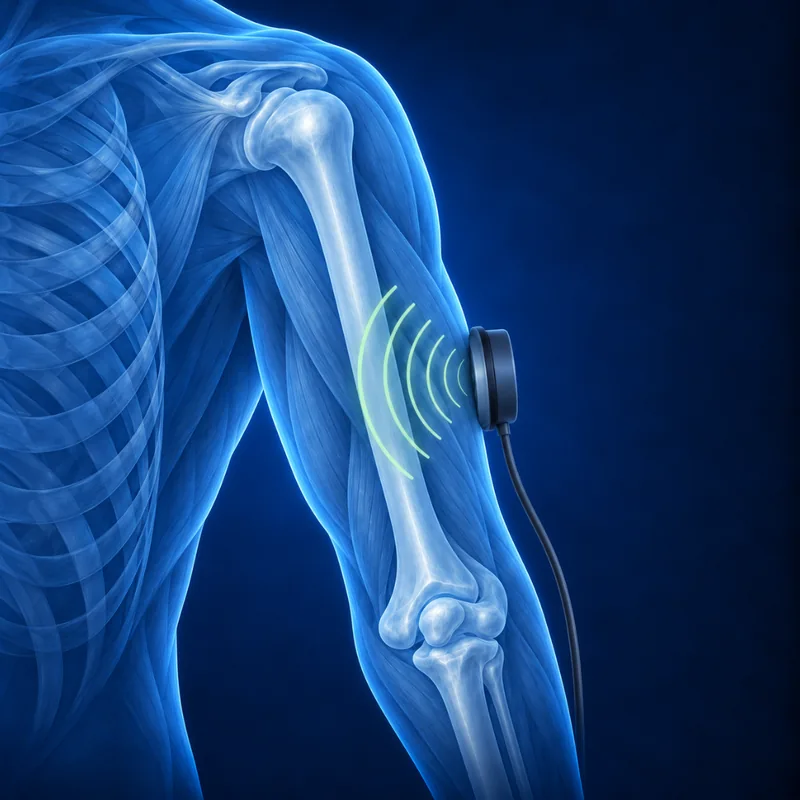
Low-intensity pulsed ultrasound (LIPUS) delivers high-frequency sound waves into tissue through an applicator placed against the skin with coupling gel. Delivered in short bursts, these waves create small mechanical forces in the treatment area. LIPUS primarily uses mechanical stimulation rather than sustained deep heating.
Cells respond to these forces through mechanotransduction, converting mechanical stimulation into biochemical signals. Laboratory research shows ultrasound can activate proteins on the cell surface, including integrins, which trigger pathways involved in tissue maintenance and repair. Animal and laboratory studies also explore effects on inflammatory signaling and proteins that support cartilage and other connective tissues.
Trials of certain LIPUS systems have reported improvements in knee osteoarthritis pain and physical function. Emerging research examines postoperative pain, swelling, and soft-tissue recovery. Cellular and animal findings do not automatically establish tissue regeneration or clinical benefits in people. Results depend on the device, ultrasound settings, treatment protocol, and condition, with further clinical research needed for many applications.
Research by area of Interest
A clearer understanding. A more informed approach to recovery.
Recover. Relief. Restore.