
The Science of
Photobiomodulation (PBM)
Explore the science behind photobiomodulation and the research that informs its use.
The Science Behind Photobiomodulation
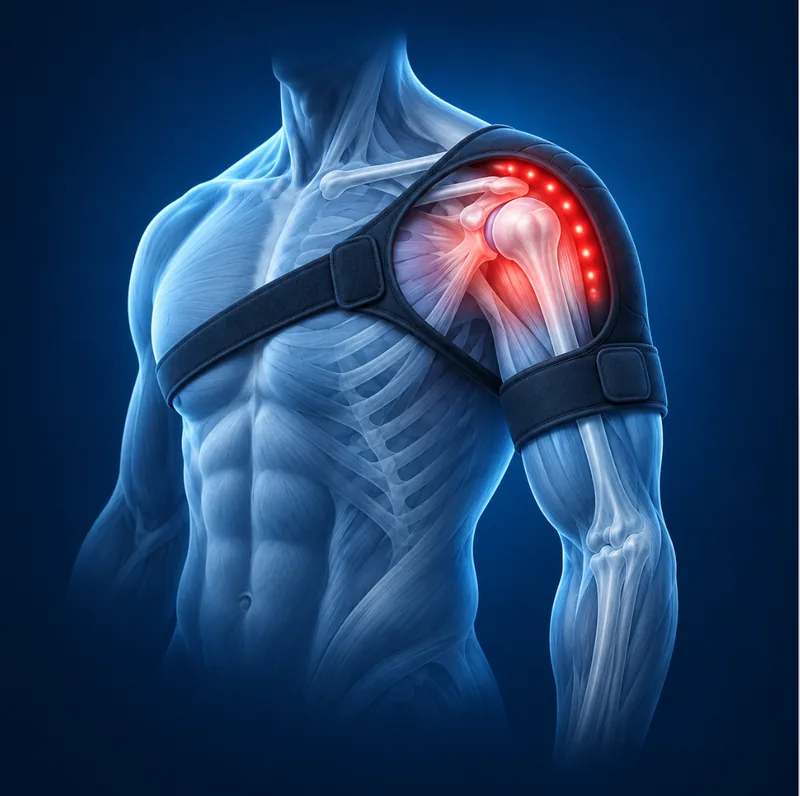
Photobiomodulation (PBM) uses red and near-infrared light to interact with cells and support processes involved in recovery. Research explores its effects on cellular energy, inflammatory signaling, and tissue repair, including its potential role in pain management and rehabilitation.
Cells rely on mitochondria to produce ATP, the energy needed for normal function and repair. Research suggests selected wavelengths can influence mitochondrial activity through interactions with cytochrome c oxidase. These interactions may affect ATP production and the signals cells use to respond to injury.
Red light is generally absorbed closer to the surface, while near-infrared light can travel farther into tissue. Actual penetration depends on wavelength, tissue characteristics, and device settings. Benefits also depend on the condition, dose, treatment location, and session length. PBM does not require strong heat, and longer sessions or higher doses do not necessarily improve results. Findings from one device or protocol do not establish the same benefits for every light therapy product.
Research by area of Interest
A clearer understanding. A more informed approach to recovery.
Recover. Relief. Restore.